Timeless Legends: Walking Down Memory Lane — Lest We Forget
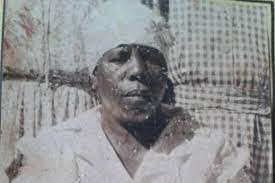
Mai Musodzi
"Elizabeth Maria 'Mai' Musodzi Ayema MBE (born Musodzi Chibhaga, c. 1885–1952) — Mother of Zimbabwean Social Services, Early African Feminist Pioneer, Niece to Mbuya Nehanda & Beloved Pillar of Mbare Whose Legacy Graces Harare's Historic Mai Musodzi Hall"
Elizabeth Maria 'Mai' Musodzi Ayema MBE (born Musodzi Chibhaga, c. 1885 – 21 July 1952) is revered as the mother and pioneer of Zimbabwean social services and one of the earliest, most fearless champions of African women's dignity under British colonial rule. Born around 1885 in the upper Mazowe valley near Salisbury (Harare) to her parents Chibhaga and Mazviwana, Musodzi came from royal spiritual lineage: she was a maternal niece to the revered Shona spirit medium and revolutionary leader Nehanda Nyakasikana (Mbuya Nehanda). Her childhood was torn apart by the 1896–1897 First Chimurenga, the anti-colonial resistance to the British South Africa Company (BSAC), in which her parents were killed and Mbuya Nehanda was captured and hanged by the colonial regime in 1898. Musodzi and her siblings were left orphans, forced to forge an identity amid the ruins of their ancestral homeland.
The orphaned children found refuge with their uncle at the Jesuit Catholic mission at Chishawasha, where Musodzi acquired literacy, basic numeracy, domestic skills, and a deep, formative Christian faith. In 1907 she was baptized with the Christian names Elizabeth Maria. A year later, in 1908, she married Frank Kashimbo Ayema, a Zambian-born sergeant serving in the British South Africa Police (BSAP). The young couple settled in the newly formed Salisbury Native Location (later named Harare township, and today Mbare) — the oldest municipal African township in the country. Their home on what would later be christened Ayema Street quickly evolved from a private family residence into an indispensable sanctuary, open door, and emergency clinic for any African arriving in the burgeoning colonial capital without shelter or support.
Living under the harsh segregation of colonial Southern Rhodesia, where the 1930 Land Apportionment Act and municipal by-laws treated African women as legally dependent minors with no independent rights to housing, tenancy, or freedom of movement, Mai Musodzi refused to accept the systemic subjugation of her sisters. Colonial authorities operated draconian pass laws and municipal vagrancy regulations designed to keep African women out of towns unless under the strict marital custody of an employed male worker. Women caught unaccompanied were routinely subjected to arbitrary nocturnal raids, harassment, summary eviction, and horrifyingly humiliating, forced public examinations for sexually transmitted infections (STIs) administered by municipal medical inspectors. Mai Musodzi launched a fierce, relentless moral campaign against these invasive medical indignities, mobilizing community women and confronting colonial municipal officers until the degrading practice was curtailed.
In 1938, seeing that African women in the township possessed neither institutional representation nor structured social safety nets, Mai Musodzi co-founded and became president of the historic Harare African Women's Club. The club was a masterstroke of grassroots community organizing: it functioned as a mutual aid society, a community education center, an economic cooperative, and an advocacy platform. Through the club, Mai Musodzi organized practical training courses in hygiene, nutrition, sewing, knitting, vegetable gardening, and domestic homecraft, deliberately equipping black women with economic skills that allowed them to earn independent livelihoods and break free from total economic dependence on male wages or abusive relationships.
Beyond vocational skills, the Harare African Women's Club served as Mbare's primary ambulance and rescue agency. Under Mai Musodzi's leadership, the club raised funds to assist destitute families, sheltered the homeless, provided clothing and food for the elderly, cared for orphaned and disabled children, and paid legal fines and bail to release women and young girls who had been arbitrarily detained by the colonial police under vagrancy or pass-law sweeps. Widows who were summarily thrown onto the streets following the deaths of their breadwinner husbands found in Mai Musodzi an unwavering defender who took them into her own home, negotiated with municipal location superintendents, and fought for their rights to retain township accommodations.
Mai Musodzi was equally vocal in challenging the entrenched patriarchal assumptions within African society itself. When township elders and men blamed women for moral decay, broken homes, and the social stresses accompanying rapid urban migration, she boldly demystified the narrative before community forums, famously proclaiming: 'It is men who cause many divorces.' She established dispute-mediation sessions where married women could air grievances regarding domestic abuse, abandonment, and infidelity without fear of retaliation, creating an unprecedented safe space for female self-determination decades before modern feminist frameworks entered national discourse.
Maternal and infant mortality in the Salisbury Location was catastrophic during the 1930s, as pregnant black mothers were barred from European medical facilities and lacked proper sanitary maternity facilities within the township. Mai Musodzi spearheaded an impassioned campaign for municipal maternity services, lobbying city fathers, Church missions, and the Native Affairs Department with empirical evidence of avoidable deaths. Her advocacy bore historic fruit when the municipality established the township's first dedicated maternity clinic, which Mai Musodzi ensured was staffed by trained African Red Cross nurses and community midwives — saving hundreds of maternal and infant lives and laying the foundation for modern community healthcare in Harare.
Her moral authority soon transcended grassroots community clubs. In the 1940s, alongside devout Catholic laywomen Berita Charlie and Sabina Maponga at St. Peter's Catholic Parish in Mbare, Mai Musodzi founded the influential sodality group 'Chita chaMaria Hosi yeDenga' (The Sodality of Mary Queen of Heaven). Elected its foundational chairperson, she channeled the religious devotion of hundreds of Catholic women into organized civic charity, parish-based hospice care, and home visitations for the sick and isolated. It was through her tireless, motherly leadership of this movement that the respectful, affectionate honorific 'Mai' (Mother) became permanently fused with her name, transforming Musodzi into a household mother-figure across Salisbury.
Recognizing her singular influence and indisputable community respect, the colonial administration was compelled to appoint Mai Musodzi to several official deliberative bodies, including the Native Advisory Board and the African committee of the National Welfare Society. In these segregated council chambers, she was virtually the sole African female voice, yet she spoke with fearless authority. She persistently demanded improved sanitation, street lighting, public water taps, better schools, and legal protections for African market traders — consistently bridging the divide between township residents and municipal authorities while never compromising her loyalty to her people.
In April 1947, in recognition of her exceptional decades of social reform and humanitarian service, King George VI conferred upon Mai Musodzi the insignia of Member of the Most Excellent Order of the British Empire (MBE). She was among a tiny, hand-picked delegation of African dignitaries invited to Government House in Salisbury to dine with Queen Elizabeth (The Queen Mother), King George VI, and Princesses Elizabeth and Margaret during their historic royal tour of Southern Africa. In an unforgettable display of African cultural dignity and quiet anti-colonial defiance, when Mai Musodzi entered the state banquet hall, she famously refused to sit at the segregated table reserved for 'African notables,' choosing instead to take her seat proudly upon the floor in traditional Shona custom — confronting the British royal family and colonial governors with an unspoken, powerful statement of indigenous self-respect.
Mai Musodzi passed away on 21 July 1952 at the age of approximately 67, after a lifetime of heroic devotion to the welfare of the downtrodden. Her funeral drew thousands of mourners from across the colony, including trade unionists, church leaders, municipal authorities, and legions of ordinary township women whose lives she had personally touched. She was laid to rest at the historic Pioneer Cemetery in Mbare. Soon after her passing, the Salisbury Municipality renamed the township's primary community hall — previously the Salisbury Location Recreation Hall — to 'Mai Musodzi Hall', while the adjacent thoroughfare where she lived was officially named Ayema Street in honour of her family.
For over seven decades, Mai Musodzi Hall has remained the beating cultural and political heart of Mbare and Zimbabwe at large. It served as the incubation hub for the historic 1948 General Strike, the vibrant township music concerts of the 1960s and 1970s that gave birth to chimurenga and rock-and-roll movements, community sports, traditional dance, and public consultations during Zimbabwe's 2013 Constitution-making process. In 2008, Japanese historian Tsuneo Yoshikuni published the definitive academic biography, 'Elizabeth Musodzi and the Birth of African Feminism in Early Colonial Africa', formalizing her status as the foundational pioneer of African feminism in Southern Africa. Today, Elizabeth Maria 'Mai' Musodzi Ayema MBE stands proudly and permanently enshrined on the Zimbabwe Digital Wall of Fame as a true ZimLegend — the mother of Zimbabwean social services, whose fearless courage, profound compassion, and unwavering faith transformed the lives of generations.
Share this legend's story
Related Searches
ZimLegends
Top Zimbabwean Talent
Popular ZimLegends Searches
Featured
Timeless LegendsTimeless Legends: Walking Down Memory Lane — Lest We Forget