Timeless Legends: Walking Down Memory Lane — Lest We Forget
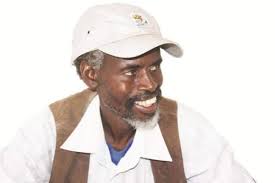
Cont Mhlanga
"Never Judge a Book by Its Cover — The Quintessential Bulawayo Man of Zimbabwean Theatre, Drama and Film Whose Giant Productions Defied His Frail Frame"
Cont Mhlanga — born Continueloving Mdladla Mhlanga — was one of the most profound, influential, and visionary figures in the history of Zimbabwean theatre, drama, and film. A quintessential Bulawayo man, Mhlanga was the creative force behind massive productions such as Amakorokoza, Sinjalo, The Good President, and Workshop Negative, works that transformed the nation's arts landscape and cemented his reputation as an arts genius and Ndebele cultural icon. Yet for all the scale and ambition of his productions, Mhlanga remained a deliberately private, media-shy figure who let his work speak for him. 'Umkhulu lo Msebenzi' — a profound Ndebele adage meaning 'The work is great' — became the motto of his company, Amakhosi Theatre Productions, and the guiding principle of a life devoted to the arts.
Mhlanga was born on 16 March 1958 at Fatima Mission in Lupane, in what was then Matabeleland. His father was Dickson Mbikwa and his mother was Sarah Danile. Cont was the firstborn in a large family of 14 boys and four girls, a household that shaped his sense of responsibility and leadership from an early age. He attended Shabula and Fatima Primary Schools before completing Forms One and Two at Fatima High School. He then proceeded to Sobokhazi High School in Bulawayo for his Forms Three and Four, where his education in the city that would become his creative home was completed.
Cont Mhlanga's journey into the world of arts began not on a stage but in a karate dojo. In 1979, he formed a youth karate club called the Dragons Karate Club. A prime, athletic Mhlanga was conducting his karate practice sessions alone at the family's Nguboyenja house when a teenager named Albert Mparura asked to join him. Mparura's friend joined too, and within a week the number had risen to six, then to ten within two weeks. That modest gathering laid the first seed for what would become Amakhosi Theatre Productions. The first generation of Amakhosi was made up of children below the age of 19.
As membership grew rapidly, Mhlanga's father, Dickson Mbikwa, noticed that the number of children coming for karate sessions was increasing by the day and advised his son to move to a bigger venue in line with city council policy. Mbikwa teamed up with a local councillor for Makokoba and approached the city council for space. The Dragons Karate Club moved to Mthwakazi Youth Centre and later to the larger Stanley Hall in Makokoba as the membership kept growing. Cont and his students were obsessed with making a kung-fu movie as a way of raising money for their karate club, but the karate master and his boys had no clue how to write a story.
The turning point came in 1980. When the group arrived for their routine training one day, they found Stanley Hall occupied by participants attending a theatre workshop conducted by the National Theatre Organisation, which was at that time made up mainly of white members because black people were nowhere to be seen in that space. On impulse, Cont decided to join the workshop, probably out of curiosity. 'I told everyone to go home and I attended the workshop. That's when I discovered that this was what we wanted in our Kung-fu film — how to write stories,' Mhlanga later recalled. That single decision proved to be a life-changer: Cont Mhlanga the playwright was born, and Amakhosi Theatre Productions was established the following year, in 1981.
His first drama after the training was Bantwana Bantwana, which, however, did not feature kung-fu. But Cont remained obsessed with making his kung-fu film, and that needed a lot of money. He opted to do low-budget kung-fu plays as a way of raising funds for the production, and his next project, The Book of Lies, had a lot of kung-fu action in it. With time, Mhlanga and his team realised that their karate plays were not bringing in enough money to realise their dream of making a karate movie — only children were coming to watch. The playwright then decided to write a drama, Ngizozula Lawe, which featured traditional dance and choreography as a way of luring an adult audience. The trick worked magic: the drama proved hugely popular, made a lot of money for the group, and resulted in Amakhosi enjoying their first tour.
In the 1990s, Mhlanga and his Amakhosi group travelled abroad, performing their play Stitsha in different European countries. He sourced funding from a Norwegian film company, which launched Amakhosi into film production. Mhlanga again worked with the Bulawayo City Council to turn the council-owned, then-defunct Happy Valley Hotel in Nguboyenja into a studio. He named it Happy Valley Studios, and this marked the crossing over of Amakhosi from the stage to the screen. He also remade Stitsha for television, where it became popular with viewers of different ethnic backgrounds. 'Working at Happy Valley planted the seed that we needed a cultural centre. That is how the idea of Amakhosi Cultural Centre was born,' Mhlanga said in a 2021 interview.
Cont's creative genius drew international collaborators. Zimbabwe-born British actor Dr Christopher John, who worked and lived with Cont for three years in Makokoba, described the arts doyen as a courageous, intelligent, stubborn, and very funny creative genius. The two met in 1986, at a time when Cont was still working at Tregers and had just won the National Theatre Festival award with his play Nansi Le Ndoda. Dr John vividly recalled the creation of Workshop Negative: 'When Cont wrote Workshop Negative, he would come with two pages to us. We would go through the script fast and act. Our rehearsals were conducted outside with only children sitting around reacting to the play, laughing. We would play a scene, and Cont would watch it, watch the reaction and then go away and write the next excerpts. Cont wrote it in the process of seeing it develop.' The play, about a black businessman, a white Rhodesian who had fought in the war, and a former freedom fighter — with the country itself as the workshop — was rich in action and humour, and it changed their lives for the better. Dr John said no one could have written a play from such a perspective except Cont.
Most of Mhlanga's plays were politically satirical, witty, unifying, educational, and entertaining — but they also rubbed government the wrong way, landing Cont and his group in trouble with the state machinery. 'We were threatened in various ways. The CIOs were crawling over Amakhosi. Cont said to me at one stage they took him aside and told him they will cut his hands off so that he would not write anymore plays,' Dr John revealed. Despite such intimidation, Mhlanga refused to be silenced, and his courage in the face of political pressure became one of the defining features of his career. He penned 20 extraordinary plays and three books in his illustrious arts career, a body of work that established him as one of the most prolific and fearless playwrights Zimbabwe has ever produced.
Mhlanga's achievements earned him prestigious international recognition. His politically-charged play The Good President won him the Art Venture Freedom to Create award, judged the best out of nearly 1,000 entrants from 86 countries. In December 2015, Mhlanga and the Amakhosi Cultural Centre won the Prince Claus Award, an honour given for outstanding achievements in the field of culture and development. Amakhosi's polished performances also promoted township tourism in Bulawayo, drawing high-profile visitors such as South Africa's celebrated musical couple Caiphus Simenya and Letta Mbulu, who came to watch Amakhosi perform in the townships.
Beyond the stage and screen, Mhlanga played a pivotal role in transforming Zimbabwe's media landscape. He helped set up independent radio stations Skyz Metro FM, which covers Bulawayo, and the Victoria Falls-based Breeze FM. He was the founding board Vice Chairperson for the two stations' holding company, Fairtalk Communications, which also owns Keona TV. His vision for independent media was an extension of his lifelong commitment to giving voice to communities and stories that might otherwise go unheard.
Cont Mhlanga breathed his last on 1 August 2022, while admitted at the United Bulawayo Hospitals. He succumbed to pneumonia, aged 64. He was regarded by many as an arts genius and Ndebele cultural icon whose contributions to Zimbabwean theatre, film, and culture were without parallel. He is survived by his wife, Thembi Ngwabi, six children, and a grandchild. His legacy endures in the countless artists he mentored, the institutions he built, and the works that continue to inspire new generations of Zimbabwean creatives.
Today, Cont Mhlanga stands proudly on the Zimbabwe Digital Wall of Fame as a true ZimLegend — the quintessential Bulawayo man of Zimbabwean theatre, drama, and film whose giant productions defied his frail frame and whose courage, creativity, and cultural pride transformed a nation's arts landscape. From a karate club in Nguboyenja to the stages of Europe, from Stanley Hall to Happy Valley Studios, from Workshop Negative to The Good President, his journey embodies the spirit of 'Umkhulu lo Msebenzi' — the work is great — and his contributions to Zimbabwe's cultural heritage deserve to be celebrated and remembered for generations to come. Never judge a book by its cover.
Related Searches
ZimLegends
Top Zimbabwean Talent
Featured
Timeless LegendsTimeless Legends: Walking Down Memory Lane — Lest We Forget