Timeless Legends: Walking Down Memory Lane — Lest We Forget
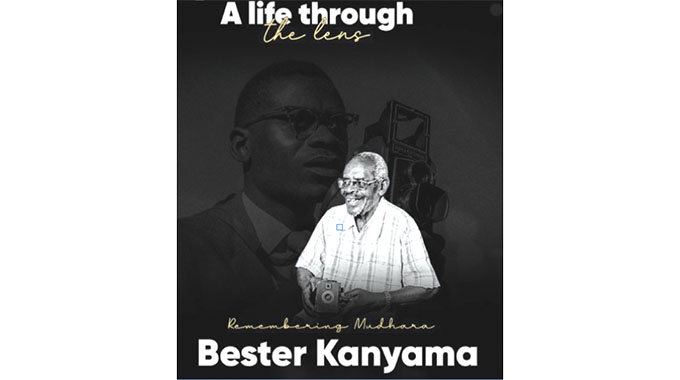
Bester Kanyama
"Dean of Zimbabwean Photojournalism & Presidential Photographer — The Trailblazing 'Johnnie Walker' Photojournalist and Founder of Foto Bester Kanyama Studios in Highfield Who Documented the Liberation Struggle, Authored 'Kutora Mifananidzo', and Captured Decades of National History Through His Iconic Lens"
Mudhara Bester (Johnnie Walker) Kanyama (1932–2025) stands as the dean of Zimbabwean photojournalism, a pioneer whose camera lens chronicled nearly eight decades of the nation's political, cultural, and social transformation. Born in 1932 in colonial Southern Rhodesia, Kanyama received his very first camera from his father in 1947, igniting a lifelong passion that evolved into a monumental career of national service. Operating from his iconic 'Foto Bester Kanyama Studios' at Machipisa Shopping Centre in Highfield, Harare, Kanyama transformed commercial photography into an art form and created a vibrant cultural landmark that served as the heartbeat of township visual culture.
Growing up in a segregated colonial society where opportunities for young black Zimbabweans were sharply restricted, Kanyama taught himself the craft of photography through sheer determination, experiment, and patient observation. With no formal training school available to him in his youth, he mastered the mechanics of early box cameras, learned to mix his own developing chemicals, and built a makeshift darkroom under the most rudimentary conditions. Those formative years of self-education instilled in him a meticulous technical discipline and a deep respect for the science of light and shadow — qualities that would distinguish his work for the rest of his extraordinary career.
During the height of Rhodesia's liberation struggle in the 1960s and 1970s, Kanyama used his camera as an instrument of truth and historic record. Through the celebrated 'Parade Foto Action' series, he bravely ventured into politically sensitive colonial detention camps, including Gonakudzingwa and Whawha, risking his personal safety to document incarcerated nationalist leaders and freedom fighters. His courageous photojournalism provided the public and international observers with rare, authentic glimpses of the anti-colonial movement, capturing nationalist leaders like Robert Mugabe and Joshua Nkomo during crucial moments of political resistance.
More than a commercial enterprise, Foto Bester Kanyama Studios at Machipisa became a treasured institution in the life of Highfield — a bustling township where weddings, graduations, christenings, and family milestones were immortalised on film beneath Kanyama's skilful hand. For generations of Highfield residents, a portrait from his studio was a mark of pride and dignity, a visual testament that their lives and celebrations mattered and deserved to be recorded with care and beauty. The studio's crowded walls, lined with framed images of families, civic leaders, and local heroes, functioned as a living gallery of township history, preserving the faces and stories of a community too often overlooked by the colonial mainstream press.
In 1970, Kanyama authored 'Kutora Mifananidzo', a groundbreaking photography instructional manual written in Shona — one of the very first indigenous-language photography handbooks in Southern Africa. The book demystified the technical craft of photography for ordinary Zimbabweans, explaining aperture, shutter speed, composition, and darkroom processing in accessible Shona terminology and opening the doors of the profession to a new generation of black photographers. Beyond the camera, Kanyama was a versatile cultural entrepreneur alongside his wife Hilda; together, they managed a popular record bar, operated four mobile discos under the 'Bes Disco' banner, and ran a modeling agency that launched international stars like Kubi Chaza (Kubi Indi). In 1978, his commercial success allowed him to purchase a home in Southerton, making him one of the very first black homeowners in the suburb prior to independence.
Kanyama's signature photographic style was defined by an uncommon clarity, warmth, and dignity. Whether photographing a head of state on an official mission or a young couple on their wedding day in Highfield, he brought the same careful attention to composition, lighting, and human expression. His portraits radiated a quiet respect for his subjects, capturing not merely their likenesses but their inner character and pride. In the darkroom, he was a perfectionist — developing, cropping, and printing his own images to exacting standards at a time when many photographers relied on commercial labs. This mastery of the full photographic process, from exposure to final print, gave his work a distinctive quality of depth and permanence that has allowed his archive to survive as a national treasure.
Following Zimbabwe's independence in 1980, Kanyama served as Chief Photographer in the Ministry of Information, accompanying Prime Minister Robert Mugabe on official international missions across the globe. It was during these diplomatic travels that he earned his legendary moniker 'Chirambakusara Johnnie Walker' — a humorous, affectionate nickname coined when Mugabe praised Kanyama's strict teetotalism and sober work ethic to his security detail, whimsically contrasting his abstinence with the famous Scotch whisky brand.
Kanyama's artistry achieved international acclaim throughout his career. In 1965, he placed fourth in the prestigious Asahi Pentax International Photo Contest; in 1983, he claimed second prize in the USSR International Photo Contest; and in 1987, he received the Excellence in Visual Arts honour from the National Gallery of Zimbabwe. In 2005, during Zimbabwe's Silver Jubilee, he was conferred a Lifetime Achievement Award by the National Arts Council of Zimbabwe. As a passionate educator, Kanyama mentored generations of photojournalists at Harare Polytechnic, including the famed photojournalist Crispen 'Foto Wizard' Masuka.
As a mentor and teacher, Kanyama shaped the very foundations of Zimbabwe's modern photojournalism profession. At Harare Polytechnic and through decades of informal apprenticeship at his Highfield studio, he trained countless photographers in the ethics, technique, and discipline of the craft — insisting that a photograph must always honour the truth and the dignity of its subject. Many of the nation's most accomplished press photographers, studio owners, and visual archivists trace their professional lineage directly to Kanyama's patient guidance, making him not only a great artist but the patriarch of an entire creative lineage that continues to document Zimbabwe's story today.
Passing away in August 2025 at the venerable age of 93, Bester Kanyama left behind an unparalleled visual archive that continues to define Zimbabwe's historical memory. His vast collection of negatives and prints — spanning the liberation struggle, the independence celebrations, decades of state diplomacy, and countless township family portraits — stands as one of the most important visual records of modern Zimbabwe ever assembled. Today, Bester Kanyama stands proudly enshrined on the Zimbabwe Digital Wall of Fame as a true ZimLegend — a master of the lens, a custodian of national memory, and a visionary cultural pioneer whose images forever preserve the soul and story of Zimbabwe.
Related Searches
ZimLegends
Top Zimbabwean Talent
Featured
Timeless LegendsTimeless Legends: Walking Down Memory Lane — Lest We Forget